
Pope Leo has presented the first major teaching document of his papacy, warning that artificial intelligence needs to be “disarmed”.
“The word is strong, I know, but deliberately chosen because this moment needs words capable of attracting attention,” the Pope said.
Encyclicals are technically letters to Catholic bishops, but over recent decades the missives have become messages to the world from a Pope.
While this letter was largely focused on AI, Pope Leo also included one of the strongest, most comprehensive apologies from the Vatican for the Catholic Church’s role in slavery.
It was “impossible not to feel deep sorrow when contemplating the immense suffering and humiliation endured by so many,” the Pope wrote, adding that he “sincerely asked for pardon” in the name of the Church.
Leo mentioned the slave trade in relation to AI, suggesting that the world was in danger of normalising the exploitation of people again – both in its production and in its applications.
Some of the Pope’s strongest imagery in the document related to slavery, warning parallels between the historical tragedy of traditional slavery and the emerging threats of “new digital slaveries”.
He suggested a risk of similar normalisation of exploitation and that humanity was at a similar moral crossroads.
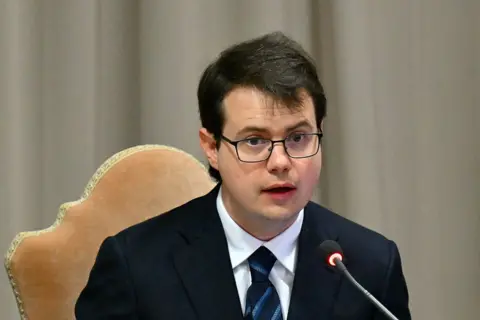
Unusually, Pope Leo chose to present the encyclical – titled “Magnifica Humanitas” (“Magnificent Humanity”) – himself, at the Vatican, alongside AI experts including Christopher Olah, co-founder of US AI giant Anthropic.
In remarks following the presentation of the encyclical, Olah said that every AI lab including his operated “inside a set of incentives and constraints that can sometimes conflict with doing the right thing”.
It would be a mistake to believe that matters of AI were best handled by computer scientists like himself, Olah added: “The questions raised by AI are bigger than the AI research community, not just in their implications, but also in their nature.”
The Pope’s encyclical – which also acknowledged the many potential pitfalls in AI – is also a stark and direct message to those in positions of power about their responsibilities in kerbing the “threats” it poses.
For example, the Pope condemned the use of AI in warfare, saying that reducing human control of weaponry makes it even harder to consider a war “just” and warned against launching an AI arms race.
 Getty Images
“No algorithm can make war morally acceptable,” the Pope wrote.
Not only does AI not remove the “intrinsic inhumanity” of war, he said, but it also risks sparking conflict more quickly and rendering it more impersonal by “lowering the threshold for resorting to violence, transforming defense into threat prediction and thus reducing victims to data”.
Leo also decried the way AI impacts on politics – such as the way it was used to manipulate images and videos, which he said exposed people to biased or misleading perspectives.
In the past, the Pope has likened today’s need for safeguards to protect people in the face of AI developments to those that were needed to ensure human dignity during the industrial revolution.
He suggested comparisons of failing to act against the risks of AI today with the “delay with which both society and the Church came to denounce the scourge of slavery”. He even referred to the risks of “digital colonialism,” linking the abuses of the colonial era to modern tech practices.
At one point in this document, the Pope directly issued a “special appeal” to those who develop AI.
“Developers bear a particular ethical and spiritual responsibility, for every design choice reflects a vision of humanity,” he said.
But what impact will all of this have?
Pope Leo has convened a commission to take his work forward, but there are huge questions as to how effective all this will be in the face of rapid technological advances.
In 2015, the late Pope Francis wrote his encyclical Laudato Si which focused on the urgent need to address the climate crisis – but then followed it up in 2023 talking about his disappointment in the inaction there had been.
As passionate as he has been about the needs to rein in AI, Pope Leo may find himself issuing a similar warning in the years ahead.
Human dignity must be protected from rise of AI, Pope says
Asaase 99.5 Accra, Asaase 98.5 Kumasi, Asaase 100.3 Cape Coast, AsaasePa 107.3 (Accra)
Affiliates: Bawku FM 101.5, Bead FM 99.9 (Bimbilla), Mining City Radio 89.5 (Tarkwa), Nandom FM 101.9, Nyatefe Radio 94.5 (Dzodze), Sissala Radio 96.3 (Tumu), Somuaa FM 89.9 (Gushegu), Stone City 90.7 (Ho) and Wale FM 106.9 (Walewale)
Listen online: atlanticafricanews.com/, Sound Garden and TuneIn
Follow us:
X: @asaaseradio995, @Asaase985ksi, @asaase1003, asaasepa1073
Instagram: asaaseradio99.5, asaase985ksi, asaase100.3, asaasepa107.3
LinkedIn: company/asaaseradio995. TikTok: @asaaseradio99.5
Facebook: asaase99.5, asaase985ksi, Asaase100.3, AsaasePa107.3
YouTube: AsaaseRadioXtra
Join the conversation. Accra: call 020 000 9951/050 009 0121, WhatsApp 020 000 0995. Kumasi: call 059 415 7985 or call/WhatsApp 020 631 5260. Cape Coast: call/WhatsApp 059 388 2652.
#AsaaseRadio
#AsaasePa
#TheVoiceofOurLand
